
NFL Player Props Rules UK: Yardage and Tackles
 Available in US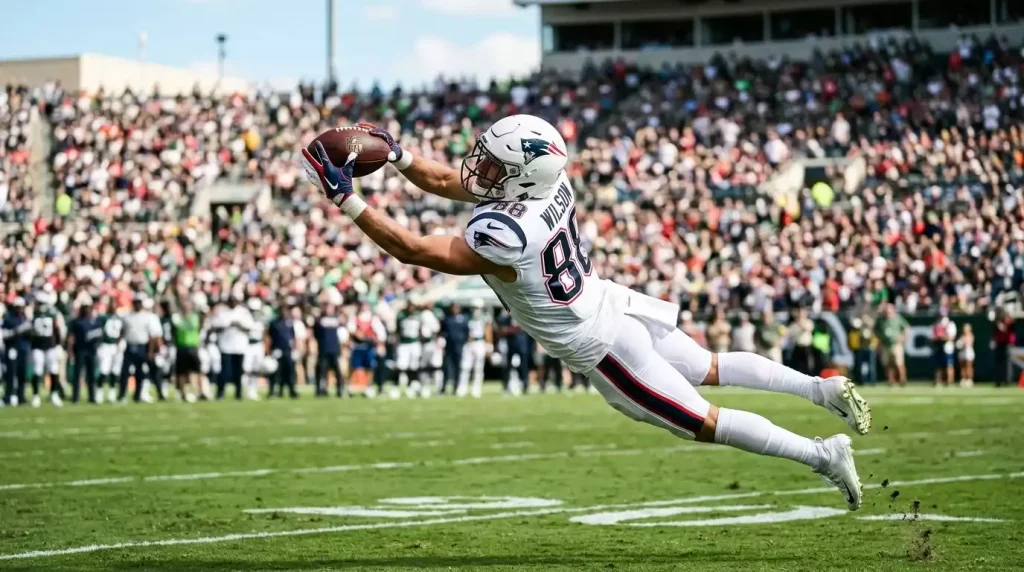
Official Stat Feeds for Player Prop Settlements
Justin Herbert was on track for 312 passing yards with two minutes left in the fourth quarter, my over at 287.5 looking like a comfortable winner. The Chargers got the ball back with a six-point lead. Herbert took three kneel-downs, which the NFL stat sheet records as negative rushing yards rather than negative passing yards, but he never attempted another pass. Final figure: 312 passing yards. The over hit. I had spent the last three minutes of game time convinced I had lost because Herbert was on the field but not throwing. Player props are a market where the settlement source matters more than the play-by-play, and the precise distinction between rushing kneel-downs and passing attempts is exactly the sort of edge case British punters need to internalise.
Player props volume in the UK has grown faster than any other NFL market category over the past three seasons. Among UK paid-search activity for NFL markets, William Hill commanded 37.83% of click-share in February 2026 and Bet365 16.2%, and both operators publish player props on every game in the regular season schedule, with the Sunday slate alone offering thousands of individual selections across all UK books. The American Gaming Association projected $30 billion of legal NFL bets in the US for the 2025 season, an 8.5% lift on the prior year, and the UK has tracked that growth in proportional terms.
One of the most popular individual markets is governed by strict anytime touchdown scorer rules, which dictate how passing and rushing scores are credited.
The standard player prop categories at UK sportsbooks
The core player prop menu at every major UK operator covers six categories. Passing yards, passing touchdowns, passing completions, passing attempts, interceptions thrown – the quarterback-centric set. Rushing yards, rushing attempts, rushing touchdowns – the running back and quarterback-mobility set. Receiving yards, receptions, receiving touchdowns – the wide receiver and tight end set. Plus defensive lines (sacks, tackles, interceptions, forced fumbles) and special-teams lines for kickers (field goals made, field goal yardage, points scored).
Each category has its own settlement source from the NFL’s official stat feed. The feed is the authoritative record of every play, every yard, every reception, and every touchdown attribution. UK operators take their settlement data from the feed, either directly or via licensed data partners. The settlement engine processes the feed once the game concludes and pushes the results to the operator’s platform, which then settles every open player prop ticket against the relevant line.
The lines on player props are set with a half-unit to prevent pushes. A passing yards line of 287.5 cannot push because no quarterback can throw for exactly 287.5 yards. Whole-number lines do appear on touchdown counts, reception counts and other integer markets, and those lines can push if the player finishes exactly on the number. The push settlement on player props is identical to the spread and totals push: stake returned, no profit or loss, no contribution to wagering requirements unless bonus terms state otherwise.
How yardage props handle in-game variance
Yardage props are the most volatile category because a single big play can swing the line by 30 yards or more. A wide receiver with a line of 67.5 receiving yards can score a 60-yard touchdown on the second play of the game and effectively settle the over before halftime. The reverse is also true: a receiver who is targeted three times in the first quarter for short gains can spend the rest of the game falling well short of the over line.
The in-play markets for yardage props update continuously as the player accumulates yardage. A receiver currently sitting at 45 receiving yards in the third quarter with the line at 67.5 will see his over price drift longer as time decays and his under price shorten correspondingly. The live market reflects the operator’s pricing engine’s view of the remaining game opportunity to hit the line.
The settlement source matters when yardage attribution is ambiguous. A reception that is initially credited to one player and reattributed on review to another is a settlement edge case. The NFL stat feed reflects the official record, but the timing of corrections can vary. Most operators wait until the official feed has been finalised – usually within an hour of the final whistle – before settling yardage props, even though the broadcast figures have stabilised much earlier.
Reception props and the half-catch rule
Reception props pay out on the number of catches the receiver completes, where “completes” means the ball is officially credited as a reception in the NFL stat record. A reception is credited when the receiver gains control of a forward pass and survives the ground rules. A pass that is broken up before the receiver controls it does not credit, even if the receiver got both hands on the ball.
The half-catch question is a common UK punter confusion. A pass that is initially credited as a reception and then reviewed for whether the receiver had control before going out of bounds can flip between credited and not-credited multiple times during the review process. The operator’s settlement engine waits for the official ruling on the field, which is announced by the referee after the review concludes. The half-catch in real time is therefore never half-credited; it is either a reception or it is not, with the decision determined by the on-field ruling.
Pushes on reception props happen when the line is a whole number and the receiver catches exactly that number of passes. A receiver with a line at 6.5 receptions cannot push, but a receiver with a line at 6 can push if the final reception count is exactly six. The push settles cleanly: stake returned, bet voided. Inside accumulators and same-game parlays, the pushed reception leg is removed and the remaining legs are recalculated against each other.
Maximize your edge on player statistics by consulting our comprehensive American football betting guide.
Did not play and inactive scratches across prop categories
The inactive rule applies universally across all player prop categories. Any bet on a player who is inactive at kick-off voids and the stake returns. The rule covers passing yards, rushing yards, receiving yards, receptions, touchdowns, sacks, interceptions thrown, and every other player-level line. The void is automatic and applies regardless of when the bet was placed.
Did-not-play covers the narrower case of a player who is dressed and active but never takes the field during the game. This is rare but happens occasionally, particularly for special-teams players who might dress without seeing meaningful action. The void rule for did-not-play applies the same way as the inactive rule. The bet voids and the stake returns. The distinction between inactive (named on the inactives list) and did-not-play (active but no snaps taken) matters for the bet history audit trail but not for the settlement outcome.
The grey zone is the player who takes one snap and exits. A wide receiver who runs onto the field for the opening play and walks off because of a tweaked hamstring has played for settlement purposes. His receiving props settle at zero yardage and zero receptions. The over loses, the under wins. The bet does not void because the player technically participated. The full settlement breakdown of how props of all kinds handle these edge cases, including same-game parlay interactions, is in the NFL prop bet settlement rules article.
Live prop markets and how operators reprice during the game
Live player prop markets are deeper than they were even three seasons ago. The major UK operators now offer in-play markets on most yardage and reception props throughout the game, with the prices updating continuously as the player accumulates the underlying stat. The pricing engine reads the current stat against the original line and produces an updated over/under price reflecting the remaining game opportunity.
The volume of live prop betting on NFL games during prime-time US windows has grown significantly with the broader UK NFL market. The 2025 regular season averaged 18.7 million viewers per game across the US measurement panel, up 10% on the prior year, and the UK has tracked that growth with proportional increases in player prop liquidity at every major operator. The market depth on a primary running back’s rushing yards line during the third quarter is usually deeper than the same market five seasons ago, allowing larger live stakes to clear without significant slippage.
Live prop suspension follows the same logic as live spread and total suspension. The market suspends during coach’s challenges, official reviews, extended injury timeouts, and immediately after touchdowns or turnovers while the engine recalculates. The suspension duration is typically under sixty seconds for routine reviews and up to three minutes for replay-booth reviews involving the player on the relevant prop.
How are passing yards prop bets settled if a quarterback is benched mid-game?
The bet settles on whatever yardage the quarterback accumulated before being benched. A quarterback who threw for 145 yards before being pulled for a backup will see his passing-yards line settle at 145, with the under usually winning. The bet does not void because the quarterback played and accumulated stats. The void rule applies only when the player is on the inactive list at kick-off or never takes the field at all. Mid-game benching is treated as a normal settlement event with the line settled at the accumulated figure.
Do receiving yards include yards from rushing plays for the same player?
No. Receiving yards count only yards gained on completed pass plays where the player was the credited receiver. Yards gained on rushing plays by the same player are recorded as rushing yards and settle the separate rushing yards line, not the receiving line. A versatile player who has both a receiving line and a rushing line will see each line settle on its own stat category, with the totals never combining across categories for settlement purposes.
Articles
Created by the "NFL Betting Rules" editorial team.
