
NFL Safety Betting Rules: Two-Point Defensive Scores
 Available in US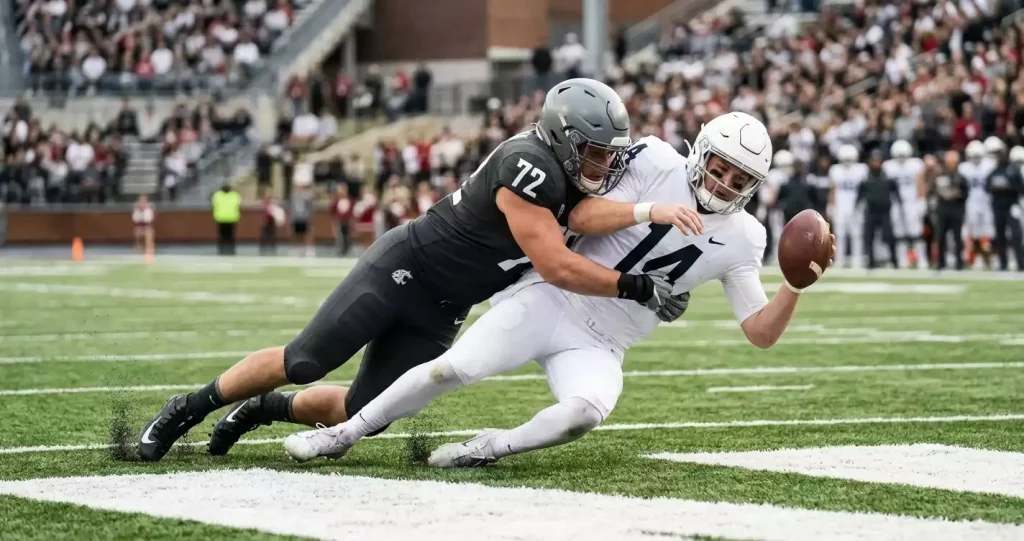
Impact of Safeties on Total Points and Spreads
The safety is the strangest scoring play in American football, and it has cost me money on a couple of occasions when I was paying more attention to the front end of an under bet than to the special-teams play that produced the safety. The clearest example was a Patriots game in 2018, when my under at 42.5 looked dead in the third quarter at 24-17, then the Patriots defence forced a safety in the fourth and I needed the score to stay below 42 (which it did, just). The safety added two points to one team’s score and zero to the other, taking the combined total from 41 to 43. Two points is a small number, but on a tight total it is the difference between a winning under and a pushed or lost ticket.
The growth of UK NFL betting volumes means more punters are exposed to these edge-case settlement scenarios than ever before. The 2025 regular season averaged 18.7 million viewers per game across the panel, an increase of 10% on the prior year, and the 2024 Super Bowl drew 2.2 million UK viewers. More viewers translate to more bets that include props involving rare scoring plays, including the safety market specifically.
What a safety is and how it is scored
A safety is a defensive score worth two points. It occurs when the offensive team is tackled, forced out of bounds, or commits an offensive penalty in their own end zone, ending the play with the ball in the offensive team’s possession behind the goal line. The defensive team is credited with two points, and the offensive team must kick off (a free kick) from their own 20-yard line to give the defending team a possession on the resulting drive.
Safeties are rare. The NFL produces roughly 8 to 12 safeties across a typical regular season of 272 games – less than one in every 25 games. Individual teams can go a full season without producing or conceding a safety. The rarity means most punters have never had a bet directly affected by a safety, but the cases where it does affect a bet are usually consequential.
The scoring play is specific. Other defensive scores – interceptions returned for touchdowns, fumble recoveries returned for touchdowns – are credited as touchdowns and worth six points (plus a try after the touchdown), not safeties. A safety is uniquely characterised by the offensive team’s failure to advance the ball out of their own end zone, with the resulting two-point credit going to the defending team.
How safeties settle on the total over/under
A safety adds two points to the combined game total because it adds two points to the defending team’s score. The over/under market settles on the final combined score including all safety points. A game with one safety has a slightly higher chance of clearing a tight over because of the extra two points, and a slightly lower chance of settling under a tight line.
The implication is small in most games but meaningful at the boundary. A total line at 41.5 with a final score of 21-22 (including one safety contributing two points to the 22) settles the over. The same matchup without the safety might have ended 21-20 and settled the under. A single defensive play has shifted the over/under outcome.
The over/under push settlement applies normally to safeties. If the line is at 43 and the final score is 21-22 (including a safety), the total is 43 exactly and the over/under pushes. The push handling is identical to any other push – stake returned, no profit or loss. The full mechanics of how the over/under push settles, including the operator’s wallet treatment of returned stakes, are in the NFL over/under push rule article.
The dedicated safety prop market
Most major UK operators offer a yes/no safety prop on every NFL game. The market asks whether a safety will be scored in the game, with binary outcomes. Given the rarity of safeties, the no side typically prices around 1/10 (very short) and the yes side around 6/1 or longer. The exact price depends on the matchup, the teams’ historical safety rates, and the operator’s pricing model.
Some operators offer more granular safety markets: how many safeties will be scored in the game, which team will concede a safety, which team will record a safety. These markets price the operator’s view of the safety distribution for the specific matchup. A 1+ safety market on a heavily favoured team’s defence might price the yes around 5/1, with the no around 1/8.
Live safety markets do not exist in most UK operators’ product menus because the in-play volume on this rare event would be too low to support a continuously updated price. Some operators do offer in-play yes/no safety markets that are temporarily available when the offensive team is pinned deep in their own territory, with the price reflecting the heightened in-game probability of a safety.
How safeties affect specific player and team prop markets
Player prop markets are mostly unaffected by safeties. The safety is a defensive play, and the scoring credit goes to the defending team rather than an individual player. The exception is when a specific defensive player makes the play that produces the safety – a sack in the end zone, for example, would credit the sacking defender with the sack stat while crediting the team with two safety points.
The sack-related prop market interacts with the safety in this way. A player’s sack prop is settled based on the sack count, regardless of where the sack occurred on the field. A sack in the end zone counts as both a sack (for the player’s prop) and a safety (for the team’s score). The two stats are independent for settlement purposes.
Team total prop markets are directly affected because the safety adds two points to the defending team’s team total. A team total under that looked safe at 18.5 with a 16-point score becomes a push at 18 if the team scores a safety. Most operators set team total lines at half-points to prevent pushes, but the safety can still nudge a team total over or under a half-point line in unexpected ways.
The strangest scoring sequence in NFL history
The one-point safety is the rarest scoring play in football. It occurs when a try after a touchdown – either a kick or a two-point attempt – ends with the ball in the defending team’s possession behind their own goal line, similar to a regular safety but during the conversion play. The defending team is credited with one point. This has happened only a handful of times in NFL history, but it has happened, and the operator’s settlement engine handles it cleanly: one point credited to the defending team, score and totals updated accordingly.
The one-point safety can affect spread and total settlement in extraordinary ways. A game where one team won by exactly one point because of a one-point safety on a missed conversion is a vanishingly rare event, but it has happened in college football and the rules are theoretically possible in the NFL. UK operators include the one-point safety in their settlement terms even though most punters will never see one.
The interaction with anytime touchdown scorer markets is unusual. A defensive player who tackles an offensive player in the end zone during a conversion attempt has not scored a touchdown – the play is a safety, not a touchdown. The anytime market does not pay out on the safety. The defending team’s defence is credited with the safety points, but the individual defender has not scored a touchdown for anytime market purposes.
The broader market context for rare-event NFL betting
The volume of betting on rare-event NFL props has grown alongside the broader UK market expansion. Entain reported 65% growth in UK and Irish NFL punter numbers across the 2024 season, with stakes up 46%, and rare-event props like safeties have been a small but consistent contributor to that lift. The novelty value of betting on a safety prop and watching the game with that bet open is a significant driver of casual UK punter engagement.
Among UK paid-search activity for NFL markets, William Hill commanded 37.83% of click-share in February 2026 and Bet365 16.2%, and both operators publish substantial rare-event prop menus on every NFL game. The pricing is sharp on these markets despite their relative rarity, because the operator’s pricing engine has decades of NFL data to calibrate against. Safety pricing in particular is among the sharpest exotic props because the data is well-tracked and the underlying rate is stable across seasons.
Do NFL safety points count towards the over/under total at UK sportsbooks?
Yes. The total over/under market settles on the final combined score of both teams, including all safety points. A safety adds two points to the defending team"s score, which raises the combined total by two compared with the same game without the safety. This can shift the over/under outcome on tight lines, particularly when the line is set at a whole number where the safety could push or break the bet.
How does a defensive sack in the end zone affect player and team prop settlement?
The sack credits the defensive player with a sack stat, settling any relevant sack prop. The safety credits the defending team with two points, settling any relevant safety prop on the team. The two settlements are independent: a sack-in-the-end-zone is one play with two stat consequences, and the operator"s settlement engine processes both credits separately against any open prop bets that reference them.
Articles
Created by the "NFL Betting Rules" editorial team.
