NFL Postponed Game Rules: Settling Abandoned Fixtures
 Available in US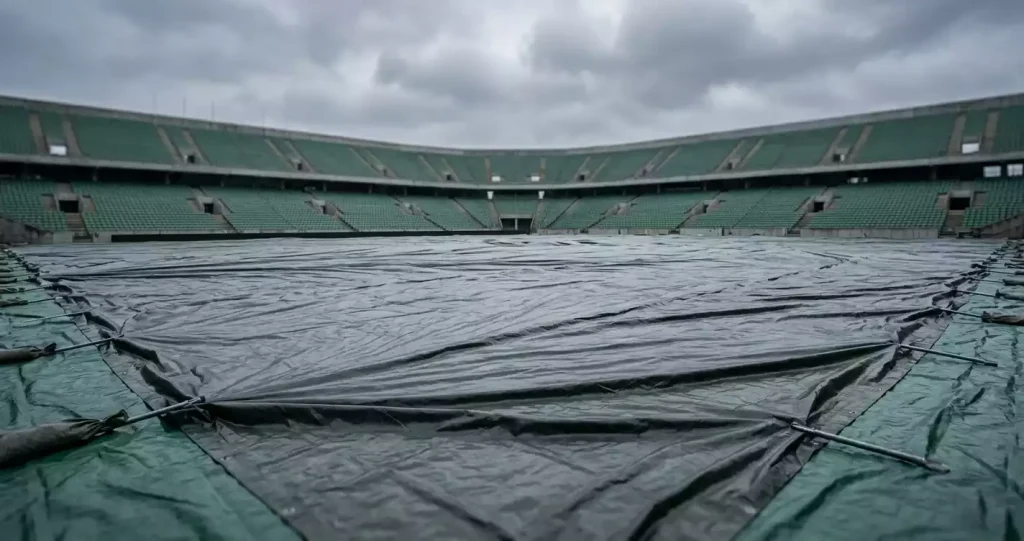
Voiding and Resettling Disrupted NFL Matches
December 2017. The Eagles and Giants game was delayed by weather, eventually played the next afternoon, and my Sunday accumulator was caught in a settlement limbo for nearly thirty-six hours. The other legs settled on time. The Eagles leg sat there as “Open” until the rescheduled game finished. The operator’s settlement engine had recognised the postponement, paused the leg, and waited for the new official result. The bet eventually settled cleanly, but the lesson stuck: NFL postponements ripple through every market type and every bet construction, and the operator’s rules vary by exactly how the postponement unfolded.
Postponements have become more common across the past decade as the NFL has expanded its international schedule, navigated COVID-era disruptions, and added flexibility for weather and player-availability emergencies. The UK Gambling Commission has been clear about its expectations for operator transparency on disrupted events. Andrew Rhodes, the UK Gambling Commission’s chief executive, has framed the broader UK market’s sport-betting growth in revealing terms: Betting in Great Britain has been widening for some time, and shows no signs of slowing down. Among adults who bet, growth in football betting is being challenged by other sports.
The implication for NFL punters is that the regulator scrutinises operator settlement behaviour on disrupted games closely, and the rules around postponement settlement are consistent across UKGC-licensed operators as a result.
Postponement versus abandonment in NFL settlement terms
The two terms describe different operational outcomes. A postponement means the game has not been played on its scheduled date but is expected to be played at a rescheduled date. An abandonment means the game has been stopped during play and will not be resumed, with the result determined by whatever has been agreed administratively.
The standard UK operator rule for postponements is that all open bets on the game remain open until the rescheduled date, provided the rescheduled date is within a reasonable window – usually 48 hours to 72 hours from the original kick-off time. If the rescheduled game is played within that window, the bets settle on the rescheduled result. If the rescheduled game falls outside the window, the bets are voided and stakes returned.
The standard UK operator rule for abandonments is more variable. If the game is abandoned before a defined cut-off point – usually the end of the third quarter or 45 minutes of game time – all bets void and stakes return. If the game is abandoned after the cut-off, the bets settle on the score at the moment of abandonment, treated as a final result. The specific cut-off varies by operator, and some operators apply different cut-offs to different bet types (spread, total, moneyline, props).
How a rescheduled game settles when it is played within the window
When the NFL reschedules a game and the rescheduled date falls within the operator’s defined window, the open bets carry over to the new date. The bet history shows the bet as “Pending” or “Open” until the rescheduled game concludes. The line, the price, and the bet construction remain unchanged from the original placement. The settlement happens on the rescheduled result.
This rule covers most weather-related postponements, which are typically rescheduled within 24 hours of the original kick-off. The Tuesday-night rescheduling of a Sunday game falls within the window at every major UK operator I have tracked. The bet survives, the settlement is clean, and the punter has not been asked to do anything additional.
The complication arises when the game is moved by more than 48 hours. The operator’s terms typically void open bets in that case, on the grounds that the materially different scheduling has changed the game state too much to settle on the rescheduled result. The cut-off varies but is documented in each operator’s NFL terms. If a game is rescheduled into the following week, expect open bets to void.
Suspended games during play and the cut-off rules
A game can be suspended mid-play for various reasons: severe weather, lighting failure, a serious on-field injury that prompts authorities to halt play, or rare incidents involving spectator safety. The suspension can last minutes or hours, and if the league decides not to resume the game on the same calendar day, the game becomes either a postponement (resumed later) or an abandonment (declared final at suspension).
The cut-off rule for abandonment settlement is usually phrased as “minimum game length required for bets to stand.” At most UK operators this is the end of the third quarter or 45 minutes of game time, whichever comes first. If the abandonment occurs after this minimum, the operator settles all open bets on the score at the moment of abandonment, treating the partial result as final. Spread bets settle on the partial margin. Total bets settle on the partial combined score. Moneyline bets settle on whichever team was leading at suspension.
The implication for player props during a mid-game abandonment is more nuanced. A player who has hit his over before the abandonment settles as a winner. A player who has not yet hit his line settles based on whether the cut-off applied to him specifically. Some operators apply a more generous rule to player props, voiding them rather than settling on the partial figure, on the grounds that the player did not have a full game to accumulate his stat. The terms vary widely.
Futures and outright markets when the season schedule shifts
Postponements rarely affect futures markets in significant ways, because futures settle on the eventual outcome of the season rather than individual game results. A division winner futures bet does not care which specific games were postponed within the season, only that the division was won by the selected team in the end. The settlement happens at the end of the regular season or playoffs as scheduled.
The exception is when a postponement causes a fundamental change to the season structure – a season cancelled, a playoff format altered, a championship not played. The operator’s terms include clauses for these scenarios, but they are rare enough that most British punters never encounter them. The most recent significant disruption was the COVID-era 2020 season, which produced some unusual settlements on futures that were placed before the schedule was reorganised.
For individual game bets, the postponement rules above apply consistently. For game-related futures (Super Bowl participant, conference winner), the season-level rules apply. The overlap is rare in practice but worth understanding before placing speculative pre-season futures.
How UK operators communicate postponement decisions
The operator’s communication during a postponement is uneven. Some operators push notifications to the punter’s app the moment the postponement is announced. Others wait until the rescheduled date is confirmed before updating the bet history. A small minority leave the bet status as “Open” with no proactive communication, requiring the punter to check the operator’s news feed or the broader NFL coverage to learn about the postponement.
The growth of the UK NFL market has put pressure on operators to improve postponement communication. Entain has reported 65% growth in UK and Irish NFL punter numbers across 2024, with stakes up 46%, and the operator’s customer-service load during a postponement scales with the punter base. The major operators have responded by automating postponement notifications and adding dedicated postponement-handling sections to their NFL terms pages.
The interaction between postponement rules and the moneyline tie rule is worth noting. A game that is suspended mid-play with a tied score and then declared abandoned has features of both a tied game and a disrupted game, and the operator’s terms specify how to settle this overlap. Most operators treat the abandoned-with-tied-score case as a void on two-way moneyline markets, refunding stakes, identical to the standard tie rule but triggered by the abandonment rather than by a regular-season overtime expiry. The full breakdown of how the moneyline tie rule applies across different scenarios is in the NFL moneyline tie rule article.
How quickly does a UK sportsbook void an NFL bet after a permanent postponement?
The void typically processes within 24 hours of the league"s official postponement-to-abandonment confirmation. The operator waits for the official confirmation rather than relying on news reports, because premature voids can produce reconciliation problems if the league later reschedules. Once the confirmation arrives, the operator"s settlement engine processes all open bets on the postponed fixture and credits stakes back to the wallets they were placed from.
If an NFL game is abandoned at half-time, do first-half bets still settle?
Yes. First-half markets settle at the official half-time whistle regardless of what happens later in the game. An abandonment in the third quarter or later does not retroactively void first-half bets, because those bets have already settled on the half-time result. The same logic applies to first-quarter and second-quarter markets, which settle at the quarter-end whistles before any abandonment could affect them. Only full-game markets, second-half markets and player props that span the full game are exposed to abandonment settlement.
Articles
Prepared by the NFL Betting Rules editorial staff.
